Recent international travellers may have spotted a large panda dressed in what appears to be a spacesuit peering down at them in their airport terminal, its chest festooned with Chinese and international corporate logos.
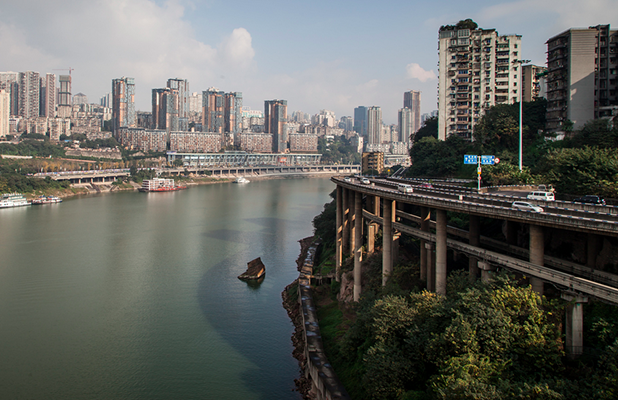
‘Half of the Fortune Global 500 are in my hometown’, proclaims the panda. It’s an advertisement for Chengdu, the ancient capital at the heart of western China’s growth story.
The unsubtle message is that its economy has taken off. Western and central China's economic growth rates overtook the eastern provinces in 2005, off a lower base. These inland regions are increasingly on the radar as Australia continues to build ties with China.
Western China's economic emergence follows a succession of sometimes-tumultuous development drives.
In the 1950s, the Communist Youth League sent 'youth volunteer land reclamation teams' to the Qinghai highlands to ‘convert empty lands into good fields’.
In the mid-1960s, amid heightened Sino-Soviet tensions and increasing US involvement in Vietnam, Mao Zedong relocated industrial production, including whole factories, from coastal areas -- vulnerable to attack by the two superpowers -- to China's west.
A large proportion of China's investment until the early seventies was poured into this 'third front', which reached from Gansu in the north down to Yunnan in an attempt to create a 'secure rear base area'.
Subsequently, reform leader Deng Xiaoping’s developmental strategy was explicitly focused on coastal areas. During the eighties and nineties, the coastal region's share of state investment, FDI and GDP grew at the expense of the central and western regions.
In 1996, Jiang Zemin introduced a policy of 'gradually reducing the gap in development between regions'. Chongqing was named a province-level municipality -- equivalent to Beijing and Shanghai -- the following year.
In 2000 the 'great western development' strategy was launched. Policies to boost western development have included fiscal transfers, investment in infrastructure and tax and loan advantages. Rising labour and land costs along China's coast have also prompted businesses to relocate inland.
Beijing's push to build economic ties with Central Asia has been a feature of the 'Go West' effort. China's premier speaks of 'establishing a Silk Road economic belt'.
Events in Urumqi and Kashgar attract traders from across the region. Major pipelines carry oil and gas from Kazakhstan, Turkmenistan and Uzbekistan to China, which has invested heavily in Central Asia's resource sector.
In 2010, Chinese companies controlled 23 percent of Kazakhstan's oil output. Increasing economic links between Central Asia and western China are part of a broader trend, with the proportion of Central Asia's trade that takes place with the rest of Asia increasing from 16.3 percent in 2000 to 35.8 percent in 2012.
Economic growth in China's west brought with it calls for increased Australian engagement. A 2009 Lowy Institute report, 'Australia's Diplomatic Deficit', identified a mismatch between Australia's 'growing economic and consular interests' in inland China and the concentration of Australia's diplomats along China's coast. The report recommended new diplomatic missions in Chengdu and Chongqing.
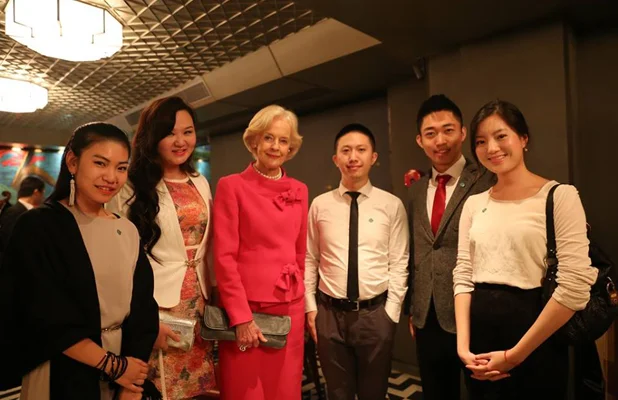
Governments are increasingly moving to support Australian businesses and organisations in western China. In 2012 the Victorian government led by Ted Baillieu (for which I worked at the time) led what was then Australia's largest ever trade mission to China.
During that mission, the government announced that it would open a government business office in Chengdu and that Sichuan Airlines would commence direct flights between Chengdu and Melbourne. Victoria also signed a trade and investment MoU with the government of Sichuan province (population: 80 million).
In 2013, the Rudd Government opened a new consulate general in Chengdu, extending Australia's western China presence beyond Austrade's Chengdu and Kunming offices. During the Abbott Government's recent trade mission to China (which included industry events in Chengdu), the government secured an agreement to establish the Australia-Sichuan Trade and Investment Roundtable.
This proactive approach to the region by government is especially important because Australian businesses in western China will often be operating in less developed locations than the more familiar coastal cities, while contending with variable business conditions.
'China 2030', a joint report of the World Bank and China's State Council, found that productivity in western China was less than half the level of the eastern regions. The Economist Intelligence Unit forecasts that urbanisation rates in Yunnan, Tibet and Guizhou will continue to lag behind comparatively wealthy coastal provinces.
However, western China's catch-up development also presents opportunities for Australian businesses. ‘China 2030’ identifies 'green development' as a strategy for western China to catch up with coastal provinces without continuing the environmentally disastrous 'clean up later' approach. Australian firms have considerable expertise in fields such as energy efficiency and sustainable urban design with, for example, Melbourne-based architects recently winning a major Chengdu commission ahead of Chinese and international competitors.
The impetus for Australia's deeper engagement with western China goes beyond economics. It’s also about building people-to-people links. Additionally, Western China is a window on how China's leaders see their place in the world.
Much of China's interaction with Central Asia is driven by national security and resource security considerations, including through the Shanghai Cooperation Organization. The growing Australian interaction with western China is likely to bring additional insights into China's foreign relations.
Classical Chinese literature records that the original 'Journey to the West', though far from straightforward, was ultimately worthwhile. As Australia works to strengthen ties in Asia, growing engagement with western China is similarly an effort worth making.
Stephen Minas is a research associate with the Foreign Policy Centre, London.
Retrieved from businessspectator.com.au
(http://www.businessspectator.com.au/article/2014/5/8/china/why-australian-businesses-should-go-west-china)